The paper files in the archives should be protected from hardening, brittleness and damage
Nov 30, 2021
In winter, the paper files in the archives should be protected from hardening, brittleness and damage.
The archives room is an internal organization for all agencies (including groups, schools, factories, enterprises, institutions, etc.) to uniformly preserve and manage their own archives. Contemporary audiovisual archives and machine-readable archives have increased significantly, but paper archives still occupy a major position in the collections of archives around the world, and our country is no exception.
Paper files are easy to manage and use, especially paper files with historical value and confidential nature, which are more valuable and important.
However, paper archives have the characteristics of being easily damaged and non-renewable, and have higher requirements for the preservation environment.

Archivists should know that the most suitable temperature for keeping archives is 14-18°C, and the most suitable relative humidity is 50%-65%. Such temperature and humidity are the most beneficial for prolonging the life of archives. Temperature and humidity are closely related to the durability of document paper and handwriting. Unsuitable temperature and humidity can damage documents in many ways.
For the storage of paper files, it should has appropriate humidity.
If the humidity is too high or too low, it will damage the paper.
Humidity reduces the durability of paper files, fading of handwriting, and mildew.
In addition to humidity, low humidity is also not conducive to paper file storage.
The humidity in the archives room is too low, which generally means that the relative humidity in the library is below 50%, which is also called low humidity.
If the humidity in the warehouse is too low, the moisture in the archive paper will evaporate excessively, and the normal moisture content will not be maintained, which will cause the internal structure of the cellulose to be destroyed, and the cellulose in the paper will become brittle and hard, and the mechanical strength will decrease. The increase in the water content of the paper will increase the size of the paper and reduce the surface strength. The reduction of the moisture content of the paper will make the paper size smaller, and the paper will become hard and brittle.
Due to the influence of the monsoon climate, in some areas in northern of China, the annual average relative humidity is often maintained at about 30% to 40%. Even in the southern region, there are particularly dry times in winter.
It can be seen that excessive drying has a great impact on the life of archive materials, but this is often overlooked by people.

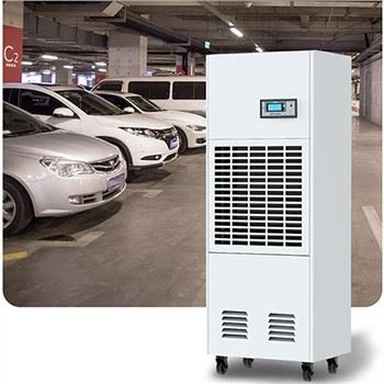
The DUOKAI archives constant temperature and humidity machine integrates dehumidification and humidification functions, which can realize accurate and reliable constant temperature and humidity control, and meet the constant temperature and humidity environment requirements of archives and museums. It can not only meet the requirements of temperature and humidity, but also achieve the effect of energy-saving. DUOKAI constant temperature and humidity machine adopts accurate measurement and control technology, the humidity control range is 30-80%RH, and the temperature control range is 16-30℃. The temperature control accuracy is ±1℃, and the humidity control accuracy is ±5%RH.

In addition, the DUOKAI constant temperature and humidity machine can automatically start and stop according to the relative humidity set by the user, with high accuracy, good reliability, beautiful appearance and easy operation. The unit is controlled by human nature, optimized for energy saving, and has high operating efficiency. It is equipped with high and low pressure, antifreeze, oil pressure protection, overload protection, compressor three-minute delay protection, under-reverse protection and other multiple safety protections. The operation is safe and stable. It is the best choice to maintain archives, museums ideal constant temperature and humidity environment!