The scope of industrial dehumidifiers
Jul 20, 2022
Industrial dehumidifiers.
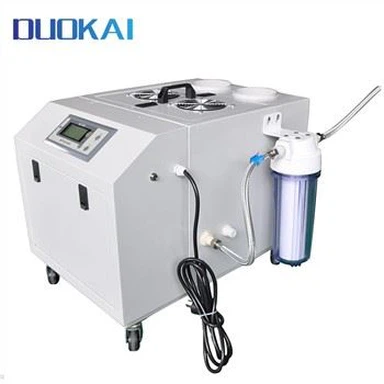
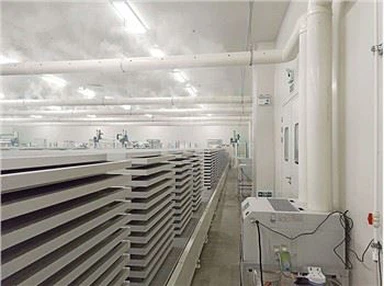
The scope of use and precautions of industrial dehumidifiers. Industrial dehumidifiers are electrical equipment specially used for air humidity adjustment, and are widely used in factory workshops, computer rooms, and other places. So do you know what are the uses of industrial dehumidifiers?
1. Control the relative humidity. In an environment with high relative humidity (greater than 80%), the purpose of cooling is achieved by reducing the relative temperature; when the ambient temperature is low, the operating frequency of the compressor can be appropriately increased to increase the cooling capacity, so that the condenser surface temperature is below the dew point and the evaporator surface is frosted.

2. Control the resurgence. In a humid environment (greater than 90% RH), the air is dried by reducing the saturated water vapor pressure of the air; When the air is too dry, the refrigerant charge of the compressor can also be appropriately increased or the refrigerant oil charge can be reduced to maintain proper superheat.
3. Prevent the accumulation of static electricity. Due to a large amount of moisture in the air, it is easy to adsorb particles such as dust and microorganisms in the air to form a discharge phenomenon and generate electrostatic charges.
4. Protect metal equipment. Corrosion, rust, and oxidation of metal equipment due to moisture will cause the performance of the equipment to decline or even be scrapped.
5. Improve operating conditions. Humid air can make people feel uncomfortable and cause some discomfort in the body.
6. Save energy. Containing a certain amount of moisture in the air can increase the circulation efficiency of the refrigeration system by more than 5% and save electricity by about 10%.
7. Extend the service life of the air conditioner. The cooling coil in the air conditioner is exposed to the atmosphere and is prone to blockage caused by condensed water, which reduces the unit capacity and reduces the work efficiency, and consumes more electricity and maintenance costs, thus affecting the service life of the air conditioner.
8. Avoid moldy items. Moisture items such as food, paper, leather, wood, etc., are extremely prone to mildew and deterioration to damage the quality and use value of items.
9. Eliminate electrostatic hazards. An object is charged because its molecular structure has changed, destroying the original equilibrium state and forming a new unbalanced state. The charge moves from positive to negative. At this time, the charge on the object is more than that on the uncharged object. This is triboelectric electrification. The phenomenon, if the static electricity is eliminated, the occurrence of triboelectric electrification can be prevented.
10. Anti-fogging. When the humid air comes into contact with the glass, it will form fog and obstruct the driver's sight, so the glass inside the car should be kept clear and dust-free.
11. Anti-salt spray. The salt contained in the atmosphere will generate a white "salt frost" on the metal surface and cause the metal to rust. Therefore, vehicles used in coastal areas should always wipe the exterior parts of the car to prevent the corrosive effect of salt on the vehicle.
12. Dustproof. Dust prevention is to prevent dust in the air from entering the machine to avoid the wear of parts or blockage of pipes.
13. Rodent proof. Rodents are very sensitive animals. They have a strong sense of smell and can distinguish between different odors of food and thus are in warehouses.